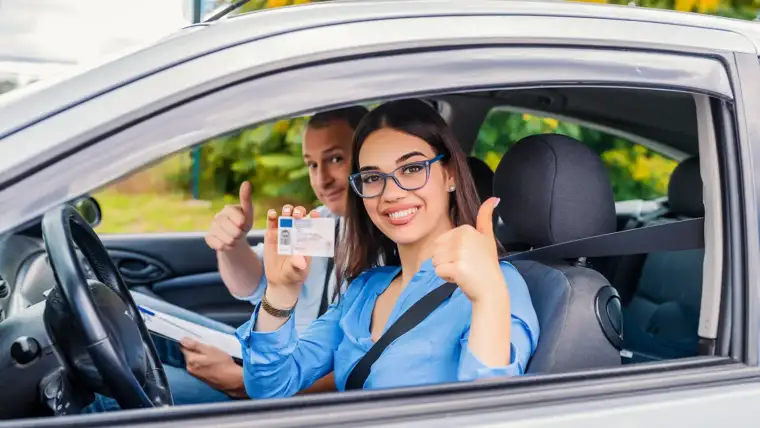

Learning to drive in Vancouver can feel very different from practising in a quiet residential neighbourhood elsewhere in Metro Vancouver — heavier traffic, pedestrians, cyclists, buses, multi-lane roads, frequent intersections, one-way streets and parking activity, all at once.
New drivers may need to process several things at once while still maintaining speed, lane position and control of the vehicle.
That can sound intimidating, but Vancouver can also be an excellent place to develop strong real-world driving skills when training progresses at the right pace.
At Easy Life Driving School, our driving lessons in Vancouver help students gradually build confidence in increasingly complex traffic environments rather than placing complete beginners into difficult situations before they are ready.
Whether you are learning to drive for the first time, preparing for your Class 7 road test, returning to driving after a break or simply trying to become more comfortable in city traffic, this guide explains some of the most important skills to develop when driving in Vancouver.
Is Vancouver a Good Place to Learn to Drive?
Yes — but the learning environment needs to match the student’s experience.
Vancouver offers exposure to many situations that new drivers eventually need to handle independently, including:
- residential streets
- multi-lane roads
- busy intersections
- pedestrians
- cyclists
- buses
- parked vehicles
- commercial areas
- one-way streets
- changing traffic patterns
- heavier commuter traffic
That variety can be valuable, but a complete beginner should not necessarily start in the busiest part of the city.
Students with little or no experience often benefit from structured beginner driving lessons where vehicle control and observation are developed progressively before more complicated traffic is introduced.
The goal is not to avoid difficult conditions forever. It is to encounter them when you have enough foundational skill to learn from them.
Build Basic Vehicle Control Before Tackling Busy Vancouver Traffic
When you first begin driving, even simple tasks require concentration. You may be thinking about:
- steering
- acceleration
- braking
- mirror position
- lane position
- signalling
- where the vehicle is located within the road
If most of your mental attention is still devoted to those basic tasks, adding heavy traffic, cyclists and complex intersections can quickly become overwhelming.
Early professional driving lessons should therefore build enough basic control that steering and speed management begin to feel increasingly natural.
Smooth Driving Begins With Seeing Problems Earlier
Students sometimes assume smooth driving comes primarily from gentle pedal control. That is only part of it.
Smooth driving often begins with early observation. If you see a red light or slowing traffic well ahead, you can reduce speed gradually. If you recognize your turn early, you can signal, position the vehicle and adjust speed without rushing. If you see a pedestrian approaching a crosswalk early, you have more time to understand what may happen.
Late observation creates late reactions. The more information you gather in advance, the easier it becomes to drive smoothly and predictably.
Vancouver Requires Strong Scanning Habits
Urban driving demands wide awareness. If you focus only on the vehicle immediately ahead, important developments can appear to happen suddenly.
Instead, new drivers should gradually learn to scan:
- farther down the road
- rear-view and side mirrors
- adjacent lanes
- traffic signals
- pedestrians
- cyclists
- buses
- parked vehicles
- crosswalks
- side streets
- road signs
Avoid Tunnel Vision
Tunnel vision is especially common among nervous drivers. The student may focus almost entirely on one object — often the vehicle in front — and stop gathering information from the rest of the environment.
This makes the drive feel unpredictable. A cyclist suddenly seems to appear. A pedestrian suddenly reaches the crosswalk. A bus suddenly stops. Traffic suddenly slows.
In reality, many of these situations could have been recognized earlier through better scanning.
Strong observation habits are therefore one of the biggest skills students should develop during Vancouver driving lessons.
Pedestrian Awareness Is Essential in Vancouver
Vancouver drivers regularly encounter pedestrians in residential, commercial and urban environments. New drivers should learn to identify people before they enter the roadway.
For example, watch for:
- people approaching crosswalks
- pedestrians emerging between parked vehicles
- people standing near intersections
- children near residential streets
- runners
- people who may be distracted
The purpose is not to assume every pedestrian will enter your path. It is to recognize the possibility early enough that you have time to respond.
Look Beyond the Crosswalk Itself
A student who looks only at the painted crosswalk may miss the person who is about to step into it. Instead, scan sidewalks and surrounding areas.
Is anyone approaching the crossing?
Can I see both sides clearly?
Could a parked vehicle be blocking my view?
This type of forward-looking observation is an important part of defensive driving lessons and safe city driving in general.
Learn to Share the Road With Cyclists
Cyclist awareness is particularly important in Vancouver. Cyclists may travel beside traffic, approach intersections or move through areas that are difficult to see using mirrors alone.
New drivers should learn to monitor cyclists as part of their normal scanning routine. Do not simply notice that a cyclist is beside you — think about how your intended movement could interact with theirs.
For example: if you intend to turn, where is the cyclist likely to travel? If you are moving toward the curb, could a cyclist be beside you? If you are changing position on the road, have you checked your blind spot?
This is why shoulder checks are not just road-test theatre. They are a practical safety skill.
Our guide to shoulder check mistakes on the ICBC road test explains several of the observation errors students commonly make.
Shoulder Checks Should Become Automatic
A new driver often remembers shoulder checks only because an instructor gives a reminder. That is normal at the beginning. But before driving independently, the habit needs to become much more consistent.
Depending on the driving situation, blind-spot observation may be important when:
- changing lanes
- leaving the curb
- moving toward the curb
- merging
- turning in certain situations
- interacting with cyclists
The goal is not to turn your head because you know someone is watching. The goal is to gather information that your mirrors cannot provide.
That distinction matters both for everyday Vancouver driving and when preparing for an ICBC road test.
Vancouver Intersections Can Require Several Decisions at Once
Intersections are often where new drivers feel most overloaded. You may need to process:
- traffic lights
- pedestrians
- cyclists
- turning vehicles
- oncoming traffic
- buses
- signs
- lane markings
- your own intended path
Trying to understand all of this at the last second makes the intersection much more difficult. The solution is to begin gathering information early.
Read the Intersection Before You Reach It
As you approach, ask yourself:
What controls this intersection?
What is traffic ahead doing?
Are pedestrians approaching the crosswalk?
Are cyclists nearby?
Which lane continues in my direction?
Is another vehicle preparing to turn?
Is anything blocking my view?
The earlier you answer these questions, the more time you have to make a safe decision. Eventually this scanning process becomes increasingly automatic.
Left Turns Require Patience in City Traffic
Left turns can be especially challenging for newer Vancouver drivers. You may need to consider:
- oncoming traffic
- pedestrians
- cyclists
- traffic signals
- lane position
- vehicle speed
- visibility
- safe gaps
A common beginner mistake is allowing impatient drivers behind them to influence the decision. If the gap is unsafe, wait.
Confidence Does Not Mean Rushing
A confident driver is not necessarily the person who makes the fastest decision. Confidence means understanding the situation and proceeding when the opportunity is appropriate.
At the same time, excessive hesitation can indicate that the student still needs practice evaluating traffic. The goal is balanced decision-making:
not aggressive, not unnecessarily hesitant — appropriate.
This judgement improves through repetition in different traffic situations.
Right Turns Require Strong Cyclist and Pedestrian Awareness
Right turns may appear easier than left turns, but city driving can make them surprisingly complex. Students may need to monitor:
- pedestrians
- cyclists
- traffic signals
- crosswalks
- signs
- vehicles ahead
- the lane they are entering
Do not become so focused on vehicle traffic that you stop observing what is happening beside the car. If a cyclist is travelling in an area near your intended path, you need to understand where they are before completing the turn.
Strong city driving depends on maintaining awareness of all road users, not only other cars.
Learn Multi-Lane Driving Gradually
Vancouver contains many roads where students need to choose and maintain the correct lane while monitoring surrounding traffic.
Multi-lane driving introduces several additional responsibilities. You need to:
- understand which lane you need
- maintain lane position
- scan mirrors
- monitor vehicles beside you
- recognize upcoming turns
- identify lanes that end or change
- make lane changes safely
Trying to learn all of this in heavy traffic for the first time can be difficult. A good progression is to practise lane changes and lane selection under lower-pressure conditions before moving toward more demanding environments.
During professional driving lessons in Vancouver, the complexity of the route can increase as the student becomes more comfortable with observation and decision-making.
Lane Changes Are About Traffic Awareness, Not Steering
The physical steering movement required to change lanes is relatively small. The real skill is understanding the traffic around you.
Before moving, you need to know:
- what is behind you
- what is beside you
- how quickly vehicles are travelling
- whether enough space exists
- whether your blind spot is clear
- what is happening ahead
Never Move Just Because Someone Gives You the Instruction
This is particularly important during road-test preparation. If an instructor or examiner says, “Change lanes,” you still need to determine when the manoeuvre is safe.
The instruction tells you what needs to happen. It does not eliminate your responsibility to decide when it can happen safely.
Students working toward independent driving can practise this decision-making during focused ICBC road test preparation lessons.
Buses Require Additional Planning
Vancouver traffic includes frequent interaction with buses and other large vehicles. Larger vehicles may block your view of:
- traffic signals
- pedestrians
- cyclists
- vehicles farther ahead
- signs
- side streets
Following too closely can therefore reduce both your reaction time and your ability to see what is developing.
Leave Enough Space to See
Following distance is not just about having room to brake. It also helps you gather information.
When you leave appropriate space behind a larger vehicle, you may have a better view of traffic conditions farther ahead. This gives you more time to anticipate changes rather than waiting until the vehicle directly in front reacts.
Learn Appropriate Following Distance
New drivers sometimes gradually move closer to the vehicle ahead without realizing it. They may be focusing so heavily on maintaining the same speed that they stop monitoring the gap itself.
Instead, treat following distance as reaction space. Ask:
If traffic suddenly slows, do I have enough time to respond smoothly?
The appropriate amount of space may need to increase when:
- roads are wet
- visibility is reduced
- traffic is unpredictable
- you are following a large vehicle
- speeds increase
Maintaining that space is a core defensive-driving skill.
One-Way Streets Require Active Sign Reading
One-way roads can be unfamiliar to students who have mostly practised in quieter suburban environments.
The important habit is not to memorize where one-way streets are located. It is to read the road environment. Look for:
- directional signs
- lane markings
- parked vehicle orientation
- traffic flow
- intersection information
Don’t Depend on the Vehicle Ahead
Following another vehicle does not guarantee that you are making the correct decision. That driver may make a mistake. They may turn somewhere you are not allowed to follow. They may position themselves incorrectly.
Your driving decisions need to come from your own observation. This is especially important when practising on unfamiliar Vancouver roads.
Parked Vehicles Create Hidden Hazards
Vancouver streets often have vehicles parked along the curb. Parked cars create several potential hazards for new drivers. They can:
- narrow the available roadway
- block pedestrians from view
- hide cyclists
- open doors unexpectedly
- pull into traffic
- block sightlines at intersections and driveways
Look for Clues
A parked vehicle may show signs that it could move. You might notice:
- brake lights
- a driver inside
- wheels turning
- reverse lights
- a door beginning to open
Good drivers learn to notice these clues early. You do not need to assume every parked vehicle will suddenly move. You simply need to recognize the possibility and leave yourself enough space to respond.
Rain Is Part of Learning to Drive in Vancouver
Wet roads are a normal part of Metro Vancouver driving. Rain can affect:
- visibility
- traction
- stopping distance
- lane-marking visibility
- pedestrian visibility
- the behaviour of surrounding drivers
New drivers should eventually gain experience in normal rainy conditions rather than practising only on dry days. The difficulty should still match the student’s experience.
A complete beginner may first need to establish comfortable vehicle control in simpler conditions. Once those fundamentals become stable, wet-weather experience becomes extremely valuable.
Give Yourself More Time
When conditions deteriorate: look farther ahead, leave additional following distance, brake earlier, avoid abrupt steering, make sure you can see clearly, and expect surrounding drivers to make mistakes.
The underlying principle is simple:
When conditions become less predictable, give yourself more time and space.
Don’t Practise Only on Familiar Vancouver Streets
Familiarity can hide weaknesses. After driving the same roads repeatedly, you may already know:
- where the lane ends
- where the school zone begins
- which lane you need
- where traffic slows
- where pedestrians usually appear
- where you need to turn
Eventually, students should practise somewhere unfamiliar. That forces you to actively read:
- signs
- lane markings
- traffic signals
- intersection layouts
- road conditions
- surrounding traffic
Students can also broaden their experience with driving lessons in Burnaby or driving lessons in Richmond as their confidence develops.
The objective is not to memorize Vancouver. It is to develop driving skills that work anywhere.
Prepare for Your ICBC Road Test Before the Final Week
Safe driving habits need repetition. Waiting until the final few days before your test can make it difficult to correct issues involving:
- observation
- shoulder checks
- speed control
- lane changes
- parking
- following distance
- intersection decisions
If your test date is approaching, use our complete ICBC road test preparation guide to identify the major skills you should be reviewing.
Professional ICBC road test preparation can also help identify habits that may be difficult to notice when practising alone or with family.
The goal is not:
“Can I perform this skill once?”
The better standard is:
“Can I perform it consistently without someone reminding me?”
Learn to Handle Vancouver’s Busier Urban Areas Gradually
As your skills improve, you should gradually become comfortable driving in more complicated urban environments. This does not mean a beginner needs to start practising in the busiest parts of Downtown Vancouver.
Instead, complexity should increase as your ability improves. You might progress from quieter residential streets to moderate traffic, then to larger intersections, multi-lane roads and eventually busier urban environments.
The purpose of this progression is to develop the ability to process more information without losing control of basic driving tasks.
Downtown Driving Requires More Attention Around You
Dense urban environments can require you to monitor several things simultaneously:
- pedestrians approaching crossings
- cyclists beside the vehicle
- buses stopping or entering traffic
- parked vehicles
- vehicles changing lanes
- one-way streets
- traffic signals
- lane markings
- upcoming turns
If you are still uncomfortable in these situations, professional driving lessons in Vancouver can help introduce more challenging environments progressively instead of trying to master everything at once.
The objective is not simply to become comfortable with one particular street. It is to become comfortable reading the traffic environment wherever you drive.
Should New Drivers Practise During Vancouver Rush Hour?
Eventually, driving in heavier traffic can be valuable. Rush-hour conditions can help students develop skills involving:
- following distance
- lane selection
- lane changes
- traffic-flow awareness
- patience
- gap selection
- anticipation
But timing matters. If basic vehicle control, mirror use or observation still requires constant reminders, heavy traffic can create unnecessary mental overload.
Build the foundation first. Then gradually introduce more complicated conditions.
Slow Traffic Does Not Mean Easy Traffic
Congested traffic may move slowly, but that does not necessarily make it simple. Drivers may change lanes frequently. Following distances may become smaller. Pedestrians and cyclists remain present. Intersections can become congested. Drivers may become impatient.
This makes continuous observation especially important.
Don’t Let Vancouver Traffic Pressure You Into Making Unsafe Decisions
New drivers sometimes feel pressure when another driver is waiting behind them. Someone may honk. A vehicle may follow too closely. Another driver may appear impatient while you are waiting to turn.
Do not allow that pressure to determine whether you proceed. If a gap is unsafe, wait. If a pedestrian is crossing, wait. If you cannot safely change lanes, wait.
Safe Confidence Is Different From Aggressive Driving
Confidence does not mean making every decision quickly. It means understanding the situation well enough to make an appropriate decision.
At the same time, excessive hesitation can become a problem if you repeatedly miss safe opportunities because you cannot evaluate traffic. The goal is to become decisive when it is safe and patient when it is not. That balance develops with experience.
Parking Should Be Part of Your Regular Vancouver Driving Practice
Parking is a practical skill you will use long after your ICBC road test. Vancouver also provides plenty of opportunities to practise different parking environments.
Students should gradually become comfortable with:
- parallel parking
- reverse stall parking
- curb parking
- parking on hills
- entering and leaving parking spaces
- reversing
- manoeuvring in tighter areas
If parallel parking is one of your weaker skills, our guide to parallel parking for the ICBC road test explains the process and common problems in more detail.
Parking Is an Observation Exercise Too
Students sometimes become so focused on positioning the vehicle that they forget about everything around it. That is a mistake.
During a parking manoeuvre, continue watching for:
- pedestrians
- cyclists
- vehicles
- open doors
- driveways
- changing conditions
A perfectly positioned vehicle does not make the manoeuvre safe if the driver failed to observe properly while getting there.
Don’t Spend All Your ICBC Preparation Practising Parking
Because parking feels technical and measurable, students sometimes spend too much of their preparation time repeating parking manoeuvres.
Parking matters. But so do the skills you use throughout the entire road test:
- observation
- speed control
- intersections
- shoulder checks
- lane changes
- following distance
- hazard recognition
- decision-making
A student who can parallel park perfectly but repeatedly misses shoulder checks still has an important problem.
Professional ICBC road test preparation should therefore evaluate your complete driving performance rather than concentrating on one manoeuvre.
Nervous Drivers Should Build Confidence Through Progression
Some students find Vancouver traffic particularly intimidating. That does not necessarily mean they are poor drivers. They may simply be trying to process more information than they are accustomed to.
A sensible progression might be:
- quiet residential roads
- simple intersections
- moderate traffic
- parking
- lane changes
- larger intersections
- unfamiliar roads
- busier commercial areas
- heavier urban traffic
Confidence usually becomes more useful when it develops together with actual skill. Simply forcing yourself repeatedly into situations that are far beyond your current ability may increase stress without improving your driving efficiently.
Drivers returning after a long break or those who already have a licence but feel uncomfortable in Vancouver traffic may benefit from refresher driving lessons focused on the situations causing the most difficulty.
Class 7 Students Need to Develop Independent Driving
One of the biggest transitions for a learner is moving from prompted driving to independent driving.
Early in your training, an instructor or supervising driver may regularly say things such as “check your mirror,” “watch your speed,” “shoulder check,” “look for the pedestrian,” “start slowing down,” or “which lane do you need?”
Those reminders are useful while learning. But they should gradually become unnecessary. Before your road test, you should increasingly recognize these situations yourself.
Ask Yourself Whether You Can Drive Without Prompts
A useful measure of road-test readiness is not simply the number of lessons you have completed. Ask:
Can I drive safely without someone beside me continually telling me what to do?
If you still need frequent reminders about observation, speed, positioning or hazards, more practice is probably useful.
Our article on how many driving lessons you may need before the ICBC road test explains why there is no single lesson number that applies to every student.
Class 5 Drivers Often Need to Correct Established Habits
Drivers preparing for Class 5 may already have substantial independent driving experience. Their challenge can therefore be different from that of a complete beginner.
Instead of learning basic vehicle control, they may need to identify habits that have gradually become inconsistent. Examples can include:
- incomplete shoulder checks
- weak mirror use
- following too closely
- rolling stops
- inconsistent scanning
- poor lane position
- inappropriate speed
These behaviours can be difficult to recognize because they may already feel normal. An outside assessment can help identify what needs improvement.
Understand Common ICBC Road Test Mistakes
Many road-test problems are not complicated manoeuvres. They are basic driving habits that become inconsistent.
Missing Shoulder Checks
A student may understand when a shoulder check is required but occasionally forget it. Consistency matters.
Poor Speed Awareness
Students sometimes focus heavily on directions or surrounding traffic and stop monitoring their speed.
Following Too Closely
Insufficient following distance reduces the time available to react to changes ahead.
Incomplete Stops
Students need to recognize when a complete stop is required and actually bring the vehicle to a stop.
Weak Observation
Looking is not the same as gathering useful information. Your observation should help you recognize hazards early enough to respond.
For a deeper explanation, read our guide to the top reasons students fail the ICBC road test.
Don’t Memorize a Vancouver ICBC Road Test Route
It is understandable that students search online for Vancouver road-test routes. Knowing the general area can reduce anxiety.
However, building your entire preparation around a supposed test route is risky. Routes can vary. Traffic changes. Construction changes road conditions. Pedestrians and cyclists are unpredictable. The examiner can provide different directions.
Instead of memorizing a route, practise interpreting unfamiliar situations correctly. That is much closer to the skill you will need once you are driving independently.
Our complete ICBC road test preparation guide can help you focus on the actual skills involved rather than trying to memorize streets.
How Do You Know When You’re Ready for Your ICBC Road Test?
Readiness is about consistency. Before taking the test, you should generally be able to:
- maintain appropriate speed
- control the vehicle smoothly
- observe consistently
- handle intersections safely
- complete appropriate shoulder checks
- change lanes safely
- maintain following distance
- recognize pedestrians and cyclists
- park safely
- respond to hazards
- make decisions without constant assistance
Before test day, use our ICBC road test checklist to review areas that may still need attention.
One successful practice drive does not necessarily mean every skill is established. Try to determine whether your performance remains safe across different routes, traffic levels and conditions.
What If You Need a Car for Your ICBC Road Test in Vancouver?
Not every student has access to a suitable vehicle on test day. Depending on availability and the service booked, using a driving school vehicle may be an option.
There can also be an advantage to testing in a vehicle you have already used during lessons. You may already be familiar with its:
- steering
- brakes
- acceleration
- mirrors
- controls
- visibility
- dimensions
That removes one unnecessary variable on test day.
If you need a vehicle, read our guide to renting a car for an ICBC road test and make arrangements before your appointment rather than leaving the vehicle decision until the last minute.
How to Choose a Driving School in Vancouver
Searching for a driving school in Vancouver can produce many options. Price matters, but it should not be the only consideration.
Think about what you actually need. Are you a complete beginner? Preparing for Class 7? Trying to correct specific road-test mistakes? Nervous in city traffic? Returning to driving after a long break? Looking for defensive-driving instruction? Looking for a road-test vehicle?
Then evaluate whether the driving school provides instruction suited to those needs. You may want to consider:
- instructor experience
- lesson structure
- communication
- service area
- road-test preparation
- lesson packages
- vehicle options
- student feedback
You can review Easy Life Driving School student reviews when comparing your options.
How Much Do Driving Lessons in Vancouver Cost?
The total cost of learning to drive depends on your starting ability and how much professional instruction you need.
A complete beginner may require several structured lessons combined with supervised practice. An experienced driver may only need focused help with specific weaknesses. A nervous driver may need additional time to become comfortable in complex traffic.
This is why simply comparing the lowest hourly price does not necessarily tell you which option offers the best value.
A productive lesson should help you identify weaknesses, correct them and understand what to practise afterward.
You can compare current driving lesson prices and packages before deciding which option best matches your goals.
Practising Outside Vancouver Can Make You a Better Driver
Students should not become dependent on one city or one familiar set of roads. Once your skills are strong enough, driving in different Metro Vancouver communities can expose you to different environments.
Easy Life Driving School also provides:
- driving lessons in Burnaby
- driving lessons in Richmond
- driving lessons in Coquitlam
- driving lessons in Port Coquitlam
- driving lessons in Port Moody
Driving somewhere unfamiliar forces you to rely on signs, lane markings, traffic signals, observation and judgement. That is ultimately what independent driving requires.
Final Thoughts on Learning to Drive in Vancouver
Vancouver is a demanding but valuable environment for developing real-world driving skills. New drivers need to learn much more than vehicle control.
They need to recognize developing situations, communicate with other road users, maintain safe space and make decisions independently.
The progression should be gradual:
control the vehicle → improve observation → handle intersections → develop lane-changing skills → practise parking → experience unfamiliar roads → manage increasingly complex traffic
Do not judge your progress by whether you can complete one perfect drive. Judge it by whether your safe habits are becoming consistent.
That principle is especially important as B.C.’s licensing system changes in 2026 and places greater emphasis on safe driving behaviour over time. For details, see our guide to the B.C. Graduated Licensing Program changes for 2026.
For official rules and current licensing information, students should also consult ICBC’s driver licensing information and the B.C. Government’s driving and transportation resources.
Book Driving Lessons in Vancouver
Learning to drive in Vancouver involves much more than learning how to steer, accelerate and brake. You need to become comfortable making decisions around traffic, pedestrians, cyclists, buses, intersections, parked vehicles and changing road conditions.
Easy Life Driving School provides professional driving lessons in Vancouver for beginners, nervous drivers and students preparing for their ICBC road test.
Complete beginners can start with structured beginner driving lessons, while students with an upcoming test can focus on ICBC road test preparation. Drivers who already have experience but want to become safer and more confident can also consider defensive driving lessons or refresher driving lessons.
The goal is to become a safe, confident and independent driver who can handle Vancouver roads even when no instructor or examiner is sitting beside you.
Frequently Asked Questions About Driving in Vancouver
Is Vancouver a good place to learn to drive?
Yes. Vancouver provides experience with residential roads, multi-lane traffic, larger intersections, pedestrians, cyclists, buses and urban driving. Complete beginners should start in easier environments and progress toward more complicated traffic as their skills improve.
Do you provide beginner driving lessons in Vancouver?
Yes. Easy Life Driving School provides professional instruction for complete beginners as well as students who already have some driving experience.
Do you provide ICBC road test preparation in Vancouver?
Yes. Easy Life Driving School provides focused ICBC road test preparation to help students identify weaknesses and develop more consistent observation, speed control, lane changes, parking and decision-making.
How many driving lessons do I need before my ICBC road test?
There is no fixed number that applies to every student. The amount of instruction you need depends on your experience, supervised practice, confidence and ability to drive safely without frequent assistance.
Should I memorize Vancouver ICBC road test routes?
No. Road-test routes and traffic conditions can vary. Developing skills that work on unfamiliar roads is more useful than memorizing a particular route.
Is driving in Downtown Vancouver difficult for beginners?
Downtown and other busy urban areas can be challenging because drivers need to monitor pedestrians, cyclists, buses, traffic, lane markings and intersections simultaneously. Beginners should progress toward these environments after developing basic vehicle control and observation skills.
Should new drivers practise during Vancouver rush hour?
Heavier traffic can provide useful experience once the student has developed stable basic skills. Complete beginners may benefit from starting in quieter conditions before gradually progressing to rush-hour traffic.
Should I practise driving in Vancouver rain?
Yes, once your basic driving skills are stable. Normal rainy conditions can help you learn how reduced visibility, traction and stopping distance affect driving.
Can I use a driving school car for my ICBC road test?
Depending on availability and the service booked, a driving school vehicle may be available for your ICBC road test. Arrangements should be made in advance.
How do I book driving lessons in Vancouver?
Review Easy Life Driving School’s current lesson options and pricing and choose the lesson or package that best matches your experience, preparation needs and driving goals.