
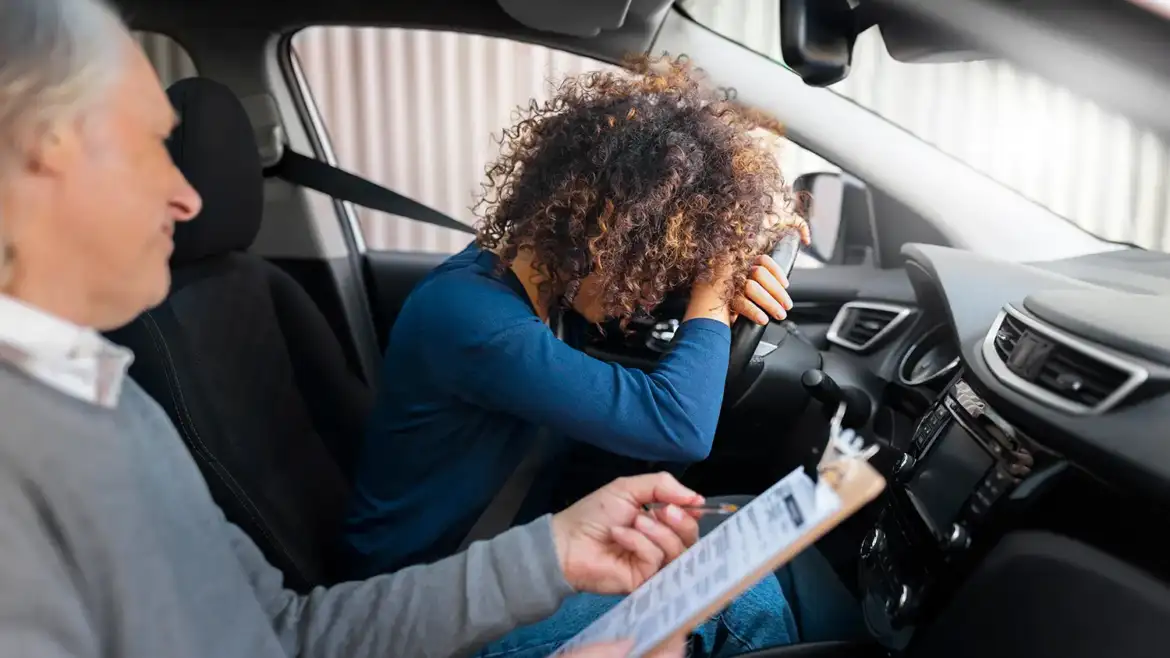
Failing the ICBC road test can be frustrating, especially after spending months preparing for the exam. The good news is that most road test failures happen for predictable reasons—and many of them can be avoided with proper preparation.
Whether you’re taking your Class 7 road test or preparing for a Class 5 road test, understanding the most common mistakes can help you improve your chances of success.
In this guide, we’ll explain the most common reasons students fail the ICBC road test and provide practical tips to help you avoid them.
Quick Answer: What Causes Most ICBC Road Test Failures?
Most students fail because of:
- Missing shoulder checks
- Poor observation
- Rolling stops
- Speed control errors
- Unsafe lane changes
- Poor parking technique
- Failure to scan intersections
- Hesitation or poor decision-making
Many of these issues can be corrected through focused practice and road test preparation lessons.
Learn more about
ICBC Road Test Preparation
.
Missing Shoulder Checks
Why It Matters
Shoulder checks help drivers identify vehicles, cyclists, and hazards that may not be visible in mirrors.
Examiners pay close attention to:
- Lane changes
- Pulling away from the curb
- Merging
- Parking manoeuvres
How to Avoid It
Make shoulder checks part of your routine:
Mirror → Signal → Shoulder Check → Move
This habit should feel automatic before test day.
Rolling Stops
Many students believe they stopped fully when they actually continued moving slightly.
Why It Causes Failures
Rolling stops reduce observation time and increase collision risk.
How to Avoid It
At stop signs:
- Stop completely
- Count one second
- Scan all directions
- Proceed only when safe
Poor Observation at Intersections
Intersections are one of the most heavily evaluated parts of the road test.
Students often:
- Focus only ahead
- Miss pedestrians
- Ignore cross traffic
- Fail to scan properly
How to Avoid It
Before entering an intersection:
- Look left
- Look right
- Look left again
- Continue scanning while proceeding
Speed Control Errors
Driving too fast and driving too slowly can both affect your score.
Common issues include:
- School zone speed errors
- Late braking
- Driving significantly under the limit
- Not adjusting for conditions
How to Avoid It
Regularly scan:
- Speedometer
- Road signs
- Traffic conditions
Maintain smooth speed control throughout the test.
Unsafe Lane Changes
Lane changes require:
- Mirror checks
- Signals
- Shoulder checks
- Safe gap selection
Many students miss one of these steps.
How to Avoid It
Follow the full routine every time.
Do not rush lane changes simply because the examiner asked you to move.
Parking Mistakes
Parking mistakes rarely cause automatic failure, but repeated issues can affect your result.
Common Parking Errors
- Parallel parking too far from the curb
- Touching the curb
- Poor vehicle positioning
- Incomplete observation
How to Avoid It
Practise:
- Parallel parking
- Reverse stall parking
- Pull-in parking
Until they become consistent.
Poor Decision-Making
Examiners want to see safe, confident decisions.
Common problems include:
- Excessive hesitation
- Unsafe gap selection
- Uncertainty at intersections
How to Avoid It
Build experience through:
- Guided instruction
- Real-world practice
- Mock road tests
Not Preparing for the Test Properly
Many failures occur before the vehicle even moves.
Students sometimes arrive:
- Unprepared
- Stressed
- Without proper documents
- In an unsuitable vehicle
For a complete preparation guide, visit:
ICBC Road Test Checklist
.
How Professional Driving Lessons Can Help
Professional instructors identify issues students may not notice themselves.
Lessons can help improve:
- Observation
- Parking
- Lane changes
- Speed control
- Confidence
Learn more about our
Beginner Driving Lessons
.
Road Test Preparation in Metro Vancouver
Easy Life Driving School helps students prepare throughout:
- Coquitlam
- Port Coquitlam
- Port Moody
- Burnaby
- Vancouver
- Richmond
Learn more about our driving lessons:
Final Thoughts
Most students who fail the ICBC road test do not fail because they lack potential.
They fail because of a few common habits that can be corrected through structured practice.
By focusing on observation, shoulder checks, parking, speed control, and safe decision-making, you can dramatically improve your chances of success on test day.
Frequently Asked Questions
What is the most common reason students fail the ICBC road test?
Missing shoulder checks is one of the most common reasons students lose marks or fail.
Is failing the road test common?
Yes. Many students require more than one attempt, especially if they have limited preparation.
Can I take lessons before retaking the road test?
Yes. Many students take focused preparation lessons before their next attempt.
What causes automatic failure?
Dangerous actions that create unsafe situations may result in immediate failure.
Do parking mistakes automatically fail you?
Not always. It depends on the severity and frequency of the mistakes.
How can I improve my chances of passing?
Practise consistently, take preparation lessons, and focus on observation and decision-making.
Should I take a lesson on test day?
Many students find a pre-test lesson helpful for confidence and warm-up.
Can nervous drivers pass the road test?
Yes. Many nervous drivers pass after gaining confidence through structured lessons.
How many lessons do I need before retaking the test?
It depends on the reasons for the previous failure and your current skill level.
Do you offer ICBC road test preparation?
Yes. Easy Life Driving School provides road test preparation throughout Metro Vancouver.